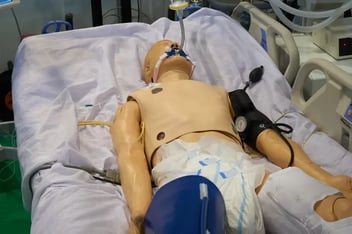
Simulation has become an essential strategy in undergraduate nursing education. From medication administration to the development of clinical judgment, simulation bridges the gap between theory and practice.
But here’s something we’ve learned over the years at Sim2Grow: 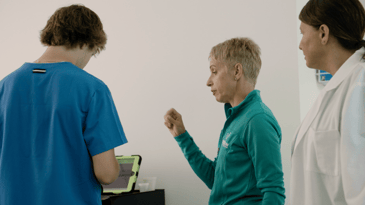
Even the most advanced simulation tools will fall flat without confident, well-prepared faculty leading the experience.
We’ve worked with programs that had great equipment — but hesitant facilitators. And we’ve seen the opposite: modest equipment, but highly trained faculty running incredibly powerful learning experiences.
The difference? Faculty development.
Below are best practices we’ve seen work — both in our own implementation and with the nursing programs we support.
1. Start with the “Why” Before the “How.”
Before diving into software, barcodes, or workflow, start with purpose.
When faculty understand:
• Why simulation matters
• How it strengthens clinical judgment
• How it supports patient safety
• How it addresses clinical placement limitations
…their confidence increases naturally.
Simulation isn’t about “running a scenario.” It’s about facilitating clinical thinking in a safe environment.
When educators truly understand that everything changes. For a deeper look at how simulation helps address today’s clinical placement shortages, read: Beyond the Bedside: Tackling the Clinical Placement Crunch in Nursing Education
2. Provide Structured, Hands-On Training
One of the biggest mistakes we see? A single demo session and then “good luck!”
Confidence comes from doing — not watching.
In our experience, the most successful programs use a phased training approach:
1. System overview
2. Guided walkthrough
3. Practice running full scenarios
4. Supported live implementation
We always encourage faculty to actually run the system themselves before students ever enter the lab. Let them scan medications. Let them chart. Let them troubleshoot.
Repetition reduces anxiety. Familiarity builds confidence.
If your simulation platform includes digital technology and electronic documentation, make sure faculty feel comfortable with the workflow before layering on facilitation skills.
3. Train Faculty in Facilitation — Not Just Operation
Technology runs the scenario. Faculty create the learning.
We’ve seen programs invest heavily in equipment but spend very little time developing facilitation skills. That’s where growth really happens.
Effective facilitators:
• Ask open-ended clinical reasoning questions
• Allow students to think through mistakes
• Maintain psychological safety
• Lead structured, reflective debriefing
Sometimes the most powerful moment in a simulation is silence — allowing a student to process instead of immediately correcting them.
Training should include:
• Pre-briefing techniques
• Managing student anxiety
• Debriefing strategies
• Handling unexpected student decisions
Simulation success depends far more on the facilitator's skill than on scenario complexity. For a deeper look, check out our blog post High Fidelity Simulation in Nursing Education and When and Why to Use it.
4. Standardize Processes to Reduce Faculty Stress
We’ve found that faculty resistance often comes from uncertainty — not unwillingness.
Clear systems reduce stress.
Successful programs use:
• Written facilitator guides
• Scenario checklists
• Equipment setup protocols
• Defined student roles
• Debriefing cue cards
When the process is standardized, faculty can focus on teaching instead of logistics.
This is especially important in medication administration simulations, where workflow consistency reinforces safe practice.
5. Build Ongoing Support — Not One-Time Training
Simulation training should not be a one-day event.
The strongest programs we’ve worked with build in:
• Peer observation
• Faculty mentors or “simulation champions.”
• Regular refreshers
• Updates when software changes
We also encourage programs to let faculty experience simulation as learners. When educators play the role of students, empathy and facilitation skills grow dramatically. For more recommendations, check out our blog post Mid-semester Reset Self-Care Strategies for Nursing Faculty and Simulation Lab Educators.
6. Measure Both Confidence and Competence
If we expect students to demonstrate competence, faculty development should be evaluated, too.
Consider:
• Post-training confidence surveys
• Facilitator observation rubrics
• Debriefing quality feedback
• Student outcome measures
When faculty feel prepared and supported, simulations run smoother — and student outcomes improve.
The Bottom Line: Simulation Success Starts with Faculty
When faculty feel confident, simulation becomes energizing instead of intimidating. When simulation becomes energizing, students engage more deeply. And when students engage more deeply, clinical judgment strengthens.
Technology matters — but faculty development makes it sustainable.
Ready to Strengthen Faculty Confidence in Your Nursing Lab?
At Sim2Grow, we don’t just provide medication administration simulation systems. We partner with nursing programs to ensure faculty feel fully prepared to implement them successfully.
Our onboarding process includes:
• Guided implementation support
• Faculty workflow training
• Best-practice facilitation guidance
• Ongoing customer support
We’ve walked alongside programs transitioning from paper med passes to fully integrated simulation workflows — and we’ve seen how powerful it can be when faculty feel equipped instead of overwhelmed.
If you’re evaluating how to strengthen simulation in your nursing lab, we’d love to connect. Schedule Your Free Demo Here!