
Reality usually arrives quietly.
There’s rarely a single moment where someone announces, “The dream was wrong.” Instead, it shows up in small, unexpected ways- often the very first moment the new equipment is delivered.
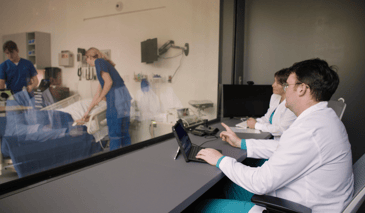 For me, one of those moments was when we purchased our first high-fidelity manikin.
On paper, I had done everything right. I researched. I compared major vendors. I evaluated features. I asked questions. I felt confident about the decision. And then the manikin arrived.
The first surprise was physical. It was heavy. Much heavier than anticipated. Suddenly, we were asking practical questions no one had really talked about: Where will this live? How do we move it safely? Who is responsible for repositioning it? The “state-of-the-art” equipment immediately became a logistical problem.
Then came the software.
I consider myself fairly tech-savvy, and even I found the software challenging. Not because it was poorly designed, but because some of its capabilities far exceeded what we actually needed to meet our learning objectives. Sometimes “realistic” is simply too realistic (and complicated) for education. Faculty members who are less comfortable with technology struggled even more, to the point where the software itself became a barrier to adoption.
What made this especially frustrating was the mismatch: the manikin could perform many impressive tasks that we didn’t need, and at the same time, lacked some features that would have supported our actual goals. Add to that the physical reality of the manikin itself- it clearly represented a male patient, which made certain female patient simulations awkward or less authentic. None of this was in the brochure or talked about by the sales reps.
Faculty Confidence Is the Hidden Variable
One of the biggest misconceptions about simulation is that resistance comes from unwillingness or lack of interest. In my experience, that’s rarely true.
What I saw instead was anxiety.
Faculty worried about not knowing how to turn the manikin on quickly. They worried about troubleshooting in front of students. They worried about appearing unprepared or incompetent in a space where they are usually the expert. That fear changes behavior.
Scenarios get simplified. Features get avoided. Simulation quietly shifts from immersive learning to task practice- or worse, to phrases like, “Just pretend you did it.”
That phrase struck a nerve with me. We have a manikin. We have equipment. If we’re going to simulate, let’s do the work…not imagine it! But that conviction only works if faculty feel supported rather than exposed.
Importantly, we didn’t allow faculty to quietly opt out of the simulation. I was fortunate to have strong support from program leadership, who made it clear that simulation was part of the curriculum. At the same time, my sim colleague and I made ourselves consistently available to support faculty, not to perform simulation for them, but to help them grow confident in using the tools themselves.
The Work No One Sees
When people tour a simulation lab, they see space and equipment. What they almost never see is time.
They don’t see the hours spent on maintenance, cleaning, software updates, charging batteries, testing connections, or troubleshooting. They don’t see the cost of consumables or the planning required to keep those costs sustainable. They don’t see the mental energy required to stay current, creative, and adaptable in a field where technology is constantly evolving.
They also don’t see trial and error.
A simulation that works well has usually failed several times quietly first. Scenarios need to be tested. Ideas need to be piloted. Sometimes things don’t land the way you hoped, and that’s not a flaw- it’s part of the process.
Sustainability Is a Design Choice
One of the realities I learned quickly is that sustainability isn’t just a budget concern- it’s an educational one.
We had to think creatively about consumables. Could IV tubing be dried, repackaged, and reused for learning purposes without compromising safety? Could we give students the experience of opening supplies without filling landfills or draining program funds? Storage, organization, and reuse became essential- not glamorous, but essential.
We also learned to say no.
No, we don’t need urine in the manikin bladder to teach sterile catheter insertion. The learning objective is maintaining a sterile field, not the spectacle of urine running through the tube. Adding unnecessary realism sometimes created bigger problems. In this example, leaks, cleanup, and long-term damage to equipment ultimately undermined learning rather than enhancing it.
Boundaries That Make Simulation Work
Over time, I realized that a functional simulation lab is held together by thoughtful boundaries.
Every activity needed clear, achievable learning objectives.
We adopted a “baby steps” philosophy for technology- small implementations, gradual growth, and continuous improvement without overwhelming faculty or staff.
We reframed glitches as opportunities. A malfunction wasn’t a failure; it was a chance to learn troubleshooting skills that would prevent future problems.
We created laminated, step-by-step guides for turning mannequins on and off and for basic troubleshooting. Faculty can learn complex systems-after all, everyone learned how to drive a car full of technology…they just needed time, clarity, and psychological safety.
We also required that all simulation and lab requests be submitted at least two weeks in advance. That boundary protected quality. It allowed time for setup, experimentation, and dry runs, rather than last-minute improvisation.
Most importantly, we invested time in faculty confidence. Practice sessions, invitations to explore the equipment, and reassurance that perfection wasn’t expected went a long way toward reducing reliance on “super users,” and building shared ownership of the lab.
Redefining “Perfect”
In the end, the perfect nursing simulation lab isn’t the one with the most impressive equipment.
It’s the one where learning objectives drive decisions, where faculty feel supported rather than exposed, where sustainability is intentional, and where students leave with experiences that stick when they care for real patients.
A simulation lab exists to make student learning stick as they care for real patients- not simply to look impressive on a website or brochure.
If your lab feels messy behind the scenes, if you’re constantly iterating, troubleshooting, and adjusting, you’re probably doing it right.
The dream may bring people through the door. But it’s the reality…the unglamorous, thoughtful, human work that makes simulation matter.
Sidebar: A Reality Check for New Simulation Coordinators
Before you say yes, ask yourself:
- What are the specific learning objectives?
- How much setup, cleanup, and maintenance will this require?
- Who will support this if something goes wrong?
- Is this sustainable for staff time and budget?
- Does this improve learning- or just realism?
Green Flags
- Faculty ask questions ahead of time
- Scenarios are piloted or dry-run
- Simplicity is valued
- Iteration is encouraged
Red Flags
- “We’ll figure it out the day of.”
- “The manikin can do this, so we should.”
- No time allotted for prep or cleanup
- Faculty feel pressured to perform
When to Be Candid vs. Diplomatic
Be candid when:
- Talking with other simulation coordinators
- Writing reflective or peer-focused content
- Advocating for realistic timelines and staffing
- Addressing sustainability and burnout
Be diplomatic when:
- Discussing purchases already made
- Talking with administrators about prestige or optics
- Navigating faculty discomfort
- Framing limitations as design choices, not shortcomings
Helpful diplomatic reframes:
- Instead of “This feature isn’t useful” → “This doesn’t align with our learning objectives right now.”
- Instead of “We don’t have time,” → “We need adequate lead time to ensure quality learning.”
- Instead of “That’s unrealistic” → “Let’s focus on what will transfer best to patient care.”
.jpg?width=352&name=s%20(7).jpg)
.webp?width=352&name=s%20(4).webp)